Rach Vem, and the starfish problem
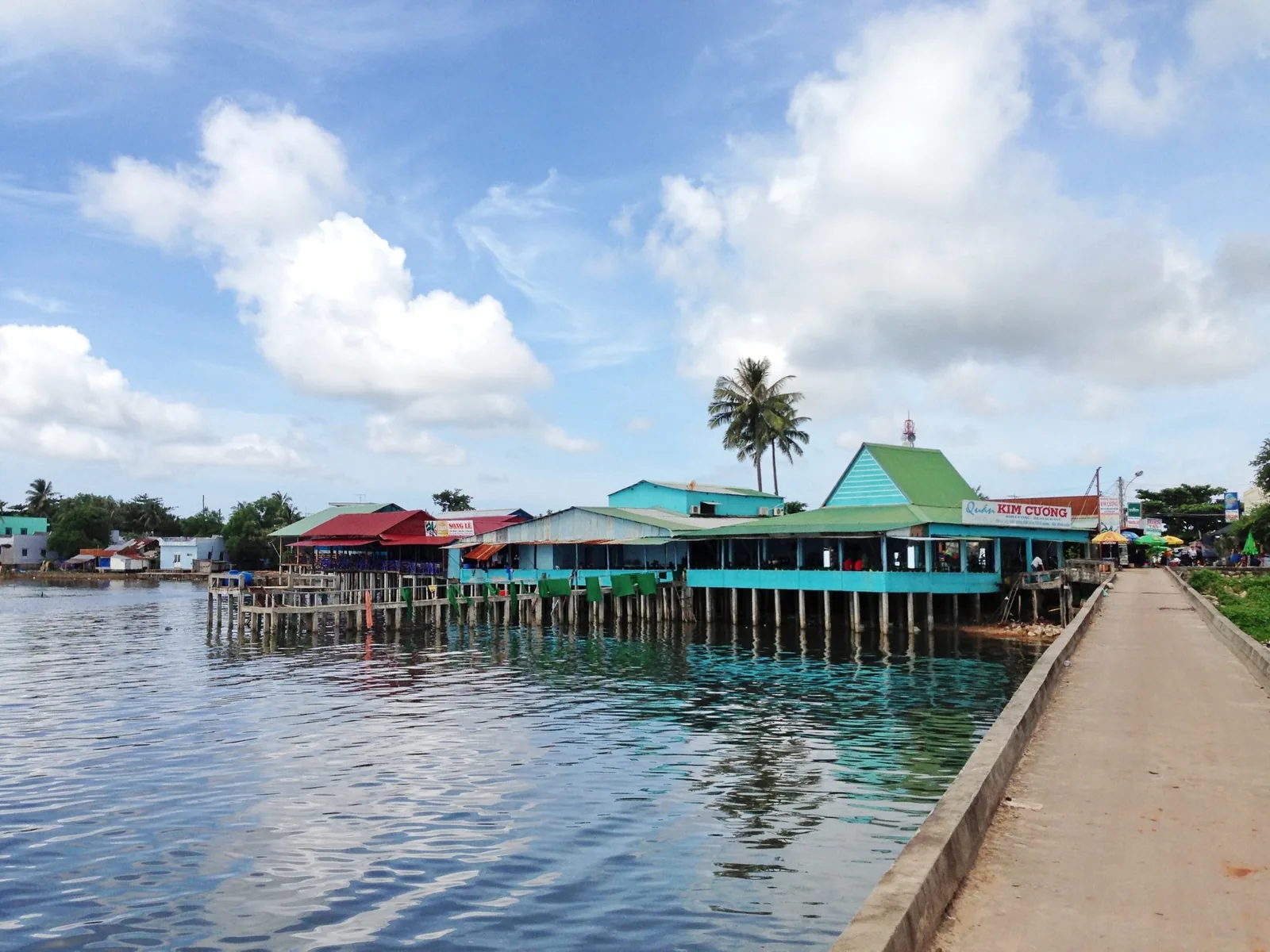
A hamlet of stilt houses over water so shallow you can walk out fifty metres, at the top of the island where almost nothing else is. It is genuinely lovely on a weekday morning and genuinely grim on a Saturday afternoon.
At a glance
| Where | The northern tip of Phu Quoc, facing Cambodia across the water |
| What it is | A small stilt hamlet, perhaps forty households, plus stilt cafes |
| Water | Ankle to knee deep for 50 metres out, warm, usually very clear |
| Starfish | Red cushion starfish in the shallows, most reliably Nov - Apr |
| Best time | Weekday morning, low tide, before 10:00 |
| Worst time | Saturday and Sunday afternoon in high season |
| Getting there | 55 to 70 minutes from Duong Dong, last 6 km unsealed |
| Stay | No. Come for two or three hours |
What this place actually is
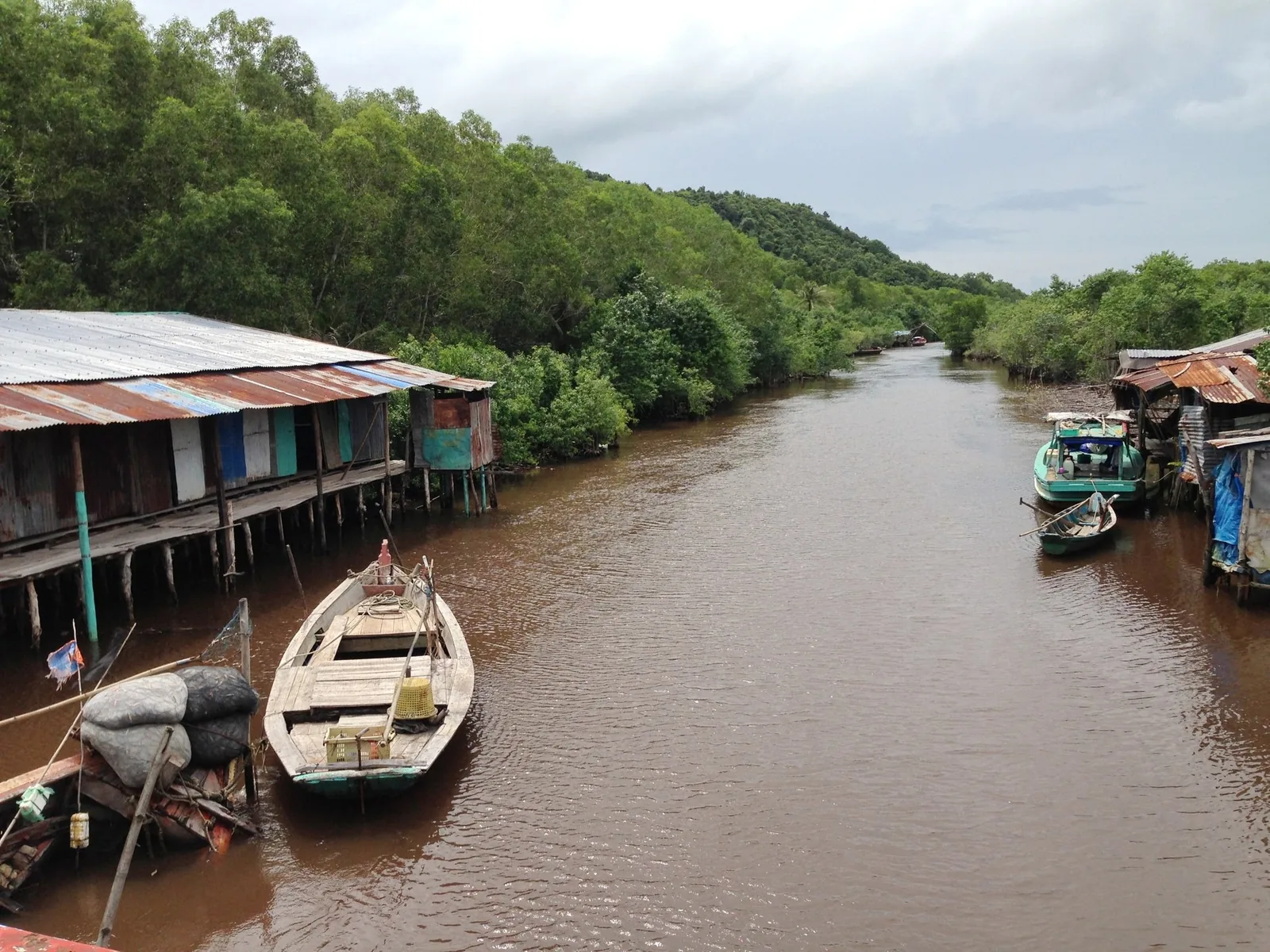
Rach Vem is a working hamlet that acquired a second business. The houses on stilts are real houses belonging to real fishing families, some of whom have added a deck, a set of plastic chairs and a coconut menu, which is a rational response to a hundred people a day arriving with money.
The water is the point. It shelves so gently that you can wade out fifty metres with your knees dry, over sand and seagrass, and it is normally clear enough to see your feet. In that shallow water there are red cushion starfish, which is what put the place on Vietnamese social media around 2019 and changed it.
On a Tuesday in January at eight in the morning, this is one of the nicest places on Phu Quoc: fifteen people, boats going out, the light coming across from Cambodia, and starfish you can look at. On a Saturday in July at two in the afternoon there are three hundred people, a queue for the stilt cafes, motorbikes on the sand and a constant procession of people lifting starfish out of the water for a photograph. Same hamlet, entirely different experience.
The starfish, and the one thing to get right
The red cushion starfish here are alive and they are not durable. Lifting one out of the water for a photograph is the single most common thing visitors do at Rach Vem and it is genuinely damaging: a starfish held out of water for a minute or two suffers, and one that is passed around, dried on hot sand or stacked for a picture usually dies. The population has visibly thinned since the place became well known.
You can see them perfectly well by standing still in twenty centimetres of clear water. If you want a photograph, photograph it where it is. Anyone who tells you it is fine to hold one for a picture is wrong, including a guide.
Local families and the commune have put up signs and the message is slowly landing, but on a busy weekend it is ignored constantly. If you go on a weekday you will mostly not have to watch it, which is one more reason to.
Season matters. Starfish are most reliably visible in the calm months from November to April, in the shallows near the stilt houses, and are far less predictable in the southwest monsoon when the water is stirred up. Nobody can promise them, and any tour that guarantees starfish is selling you something it does not control.
When to go
| When | What it is like | Verdict |
|---|---|---|
| Weekday, 07:00 - 10:00, Nov - Apr | Fifteen to forty people, clear water, calm | The best it gets |
| Weekday afternoon | Sixty to a hundred people, hot, water stirred | Fine |
| Weekend morning | A hundred plus, domestic groups arriving | Acceptable |
| Weekend afternoon, high season | Two to four hundred people, queues, sand bikes | Do not |
| Southwest monsoon, Jun - Sep | Quiet, but murky water and few starfish | Go for the hamlet, not the water |
| Public holidays and Tet | The busiest days of the year by a wide margin | Avoid entirely |
Low tide widens the wading area considerably and is worth checking. Any tide table for Phu Quoc is close enough; the range here is small, under a metre, but on this gradient a small range moves the waterline a long way.
Getting there, and what it costs
Rach Vem is 32 kilometres from Duong Dong, of which the last six are red dirt in variable condition. That road is the reason the hamlet stayed quiet as long as it did and the reason it is now reachable by any scooter in the dry season.
| How | Time from Duong Dong | Cost | Notes |
|---|---|---|---|
| Scooter | 55 - 70 minutes | Fuel, about 60,000 dong return | Fine in the dry season, unpleasant after heavy rain |
| Grab car | 60 minutes | 450,000 - 600,000 dong each way | Very hard to get a return - book the driver to wait |
| Private car and driver | 60 minutes | 1,200,000 - 1,600,000 dong for a half day | The sensible option for a family |
| On a tour | Varies | Included | Most island tours stop here for 40 minutes at the wrong time of day |
Costs at the hamlet itself are small: a coconut is 30,000 to 50,000 dong, a plate of grilled squid 120,000 to 200,000, a seat on a stilt deck free if you buy a drink. There is no entrance fee and there should never be one - if anyone tries to charge you to walk onto the sand, decline and walk on.
Gallery
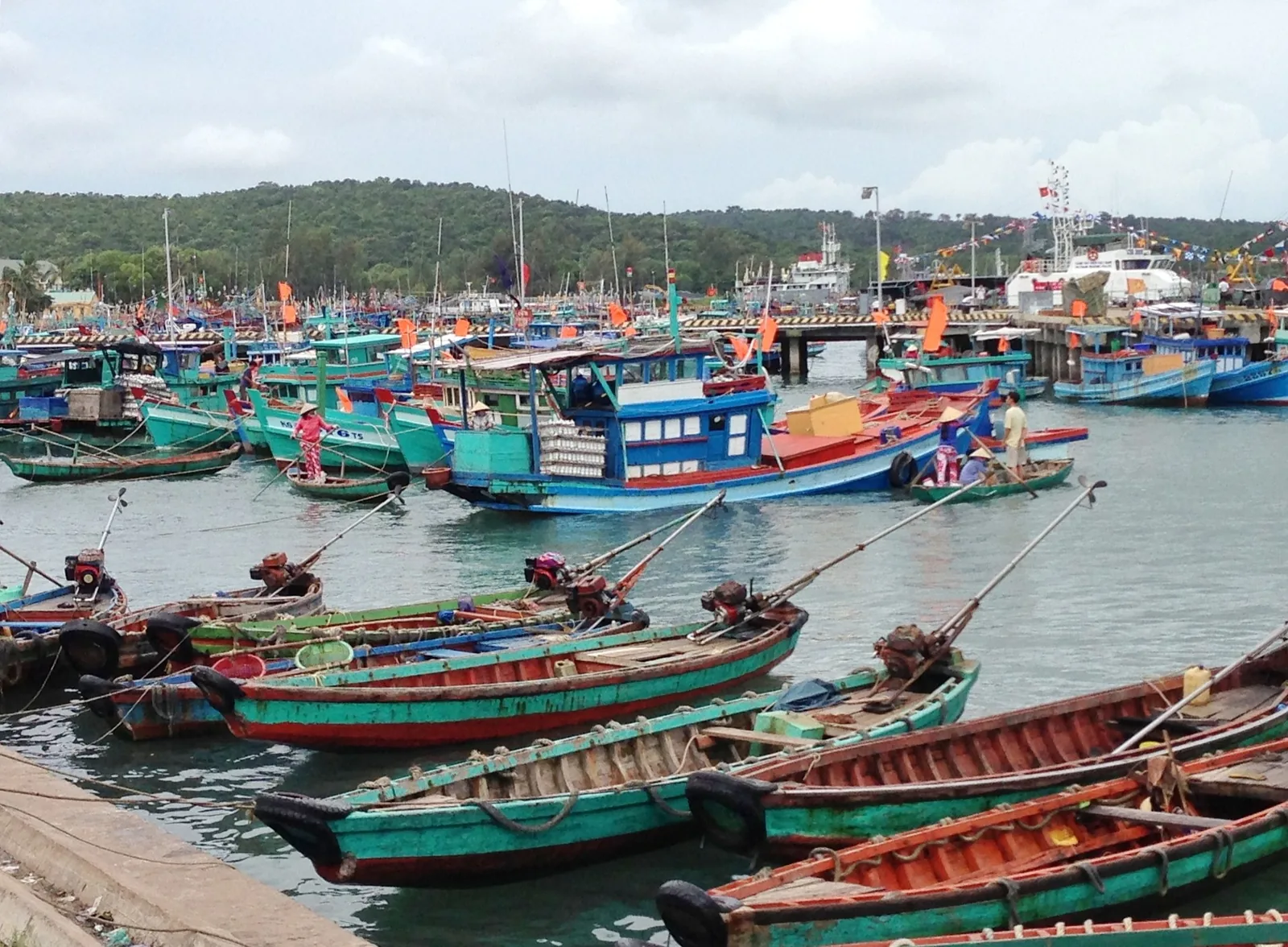
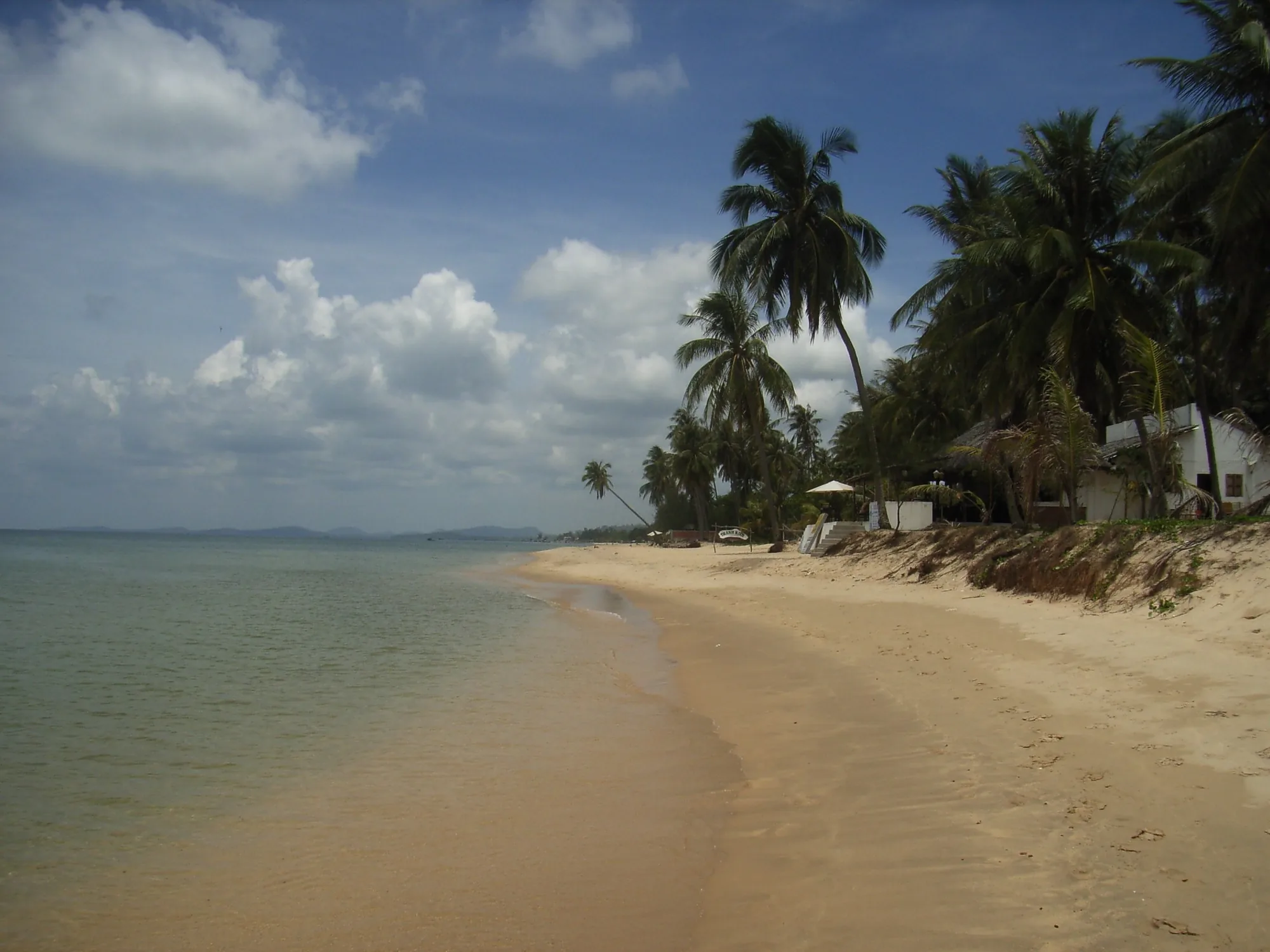
When to skip Rach Vem
- Any weekend afternoon between December and April. You will spend an hour driving to stand in a crowd.
- If you are looking for a beach to swim at. The water is shin deep for a very long way; it is for wading, not swimming.
- In heavy rain, when the last six kilometres of dirt become clay and a scooter is a genuinely bad idea.
- If you would find the starfish handling upsetting rather than annoying. On a busy day it is constant.
- If your time on the island is short. Ham Ninh at dawn and Cua Can in the afternoon are both closer and, on most days, more rewarding.
Tours that go here
Rach Vem is a stop on our back roads motorbike day, which reaches it at about half past ten on a weekday having come up the dirt from Cua Can rather than down the main road. That timing is deliberate.
We do not sell a dedicated Rach Vem trip, because two hours here does not fill a day and because we would rather not add another vehicle to a place that is already at its limit at weekends.
Questions travellers ask most
Will we definitely see starfish?
No, and nobody can promise it. In the calm months, on a weekday morning at low tide, it is likely. In the southwest monsoon it is a coin toss.
They also move. Some days they are thick near the stilt houses and some days you have to wade further out.
Is the water safe to walk in?
Yes. It is warm, shallow, sandy and calm. Wear something on your feet - there are shells, occasional broken glass near the cafes, and sea urchins on the rocky patches at the northern end.
Jellyfish appear occasionally between May and July and the locals will tell you when they are around.
Can we eat at the stilt cafes?
Yes and it is pleasant - grilled squid, sea snails, coconut, all cooked on the deck. Prices are roughly double Duong Dong and that is a fair price for the setting.
Confirm the price of seafood by weight before ordering, as you would anywhere.
Is Rach Vem ruined?
Not yet, and the honest answer is that it depends entirely on when you stand there. The hamlet still fishes, the houses are still homes and on a weekday morning it is close to what it was.
The trend is not good. If you are choosing between this year and in three years, go this year.
Read next
Tell us what you want out of the island
Dates, party size and the places you care about are enough to start. You get a draft route and an indicative price, not a brochure.